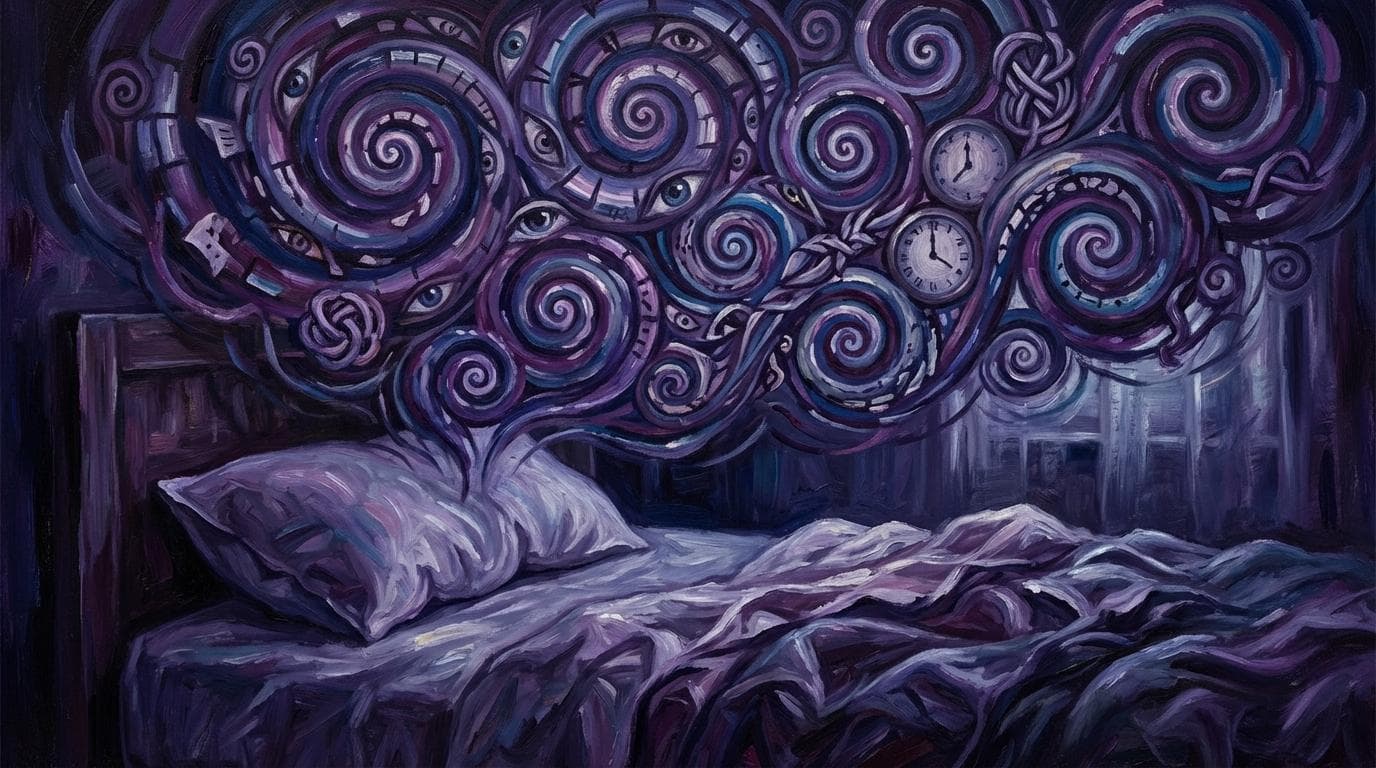
You know the feeling. The moment your head hits the pillow, a switch flips. Instead of drifting into peaceful slumber, your mind ignites with a relentless barrage of "what ifs" and "should haves." You desperately want to sleep, but the harder you try, the more elusive it becomes. The clock ticks, the minutes stretch into hours, and with each passing moment, your anxiety mounts. This, my friend, is the cruel irony of sleep anxiety – the very worry about not sleeping becomes the primary obstacle to achieving it.
It's a frustrating, debilitating loop that many experience. You lie there, acutely aware of your wakefulness, feeling the pressure to fall asleep, knowing full well that tomorrow demands a rested mind and body. But instead of relaxation, your body tenses, your heart races, and your brain refuses to quiet down. At sleeparchetype.com, we understand this struggle intimately, and we’re here to help you unravel the tangled threads of sleep anxiety so you can reclaim your nights.
The Vicious Cycle: How Worry Keeps You Awake
Sleep anxiety isn't just a fleeting concern; it's a complex interplay of physiological and psychological factors that can transform your bedroom into a battleground. Understanding these mechanisms is the first step toward disarming them.
The Hyperarousal Cycle: Your Body on High Alert
Imagine trying to relax while a fire alarm blares. That's a bit like what happens when sleep anxiety takes hold. Your body, perceiving the threat of "not sleeping," kicks into hyperarousal. This is your innate fight-or-flight response at work, a primal survival mechanism designed to keep you awake and alert in times of danger.
When you're anxious about sleep, your brain floods your system with stress hormones like cortisol and adrenaline. These hormones elevate your heart rate, increase muscle tension, and sharpen your senses – precisely the opposite of what you need for sleep. Your mind starts racing, replaying conversations, catastrophizing about the next day, or obsessing over the lack of sleep you're getting. This creates a physiological state of alertness that actively prevents your body from transitioning into the relaxed state required for sleep. It’s a self-perpetuating cycle: worry leads to arousal, arousal prevents sleep, and the lack of sleep fuels more worry.
Conditioned Insomnia: When Your Bed Becomes the Enemy
Over time, if you consistently struggle to sleep in your bed, your brain starts to form an association. Your comfortable mattress, your cozy blankets, your peaceful bedroom – they all begin to trigger feelings of frustration, anxiety, and wakefulness, rather than relaxation and sleep. This is known as conditioned insomnia or psychophysiological insomnia.
Essentially, your brain learns that your bed is a place for stress and struggle, not for rest. You might find that you can fall asleep on the couch while watching TV, but the moment you get into bed, your mind springs awake. This is because the couch hasn't developed the same negative associations. The conditioned response becomes so strong that even the thought of going to bed can trigger anxiety, further reinforcing the hyperarousal cycle.
The Tyranny of Clock-Watching: Every Tick a Torment
One of the most common and detrimental habits associated with sleep anxiety is clock-watching. You lie there, eyes darting to the digital display or listening intently for the chime of the hour. "It's 1 AM... now 2 AM... I've only got five hours left... four hours... three..."
This seemingly innocent act is incredibly damaging. Each glance at the clock amplifies your anxiety, creating immense pressure to fall asleep now. It distorts your perception of time, making minutes feel like hours, and reinforces the feeling of helplessness. Instead of allowing your body to naturally drift off, you're actively engaging your cognitive functions, calculating, panicking, and further stimulating your brain. Clock-watching transforms sleep from a natural process into a timed performance, making it almost impossible to relax.
Performance Anxiety About Sleep: The Pressure to Perform
Think about a high-stakes exam or a critical presentation. You feel the pressure to perform well, to get it right. For many, sleep can take on this same intense, performance-driven quality. You feel an overwhelming pressure to "perform" sleep correctly – to fall asleep quickly, to stay asleep, to wake up refreshed.
When sleep becomes a task you can "fail" at, the pressure becomes immense. You start to judge yourself based on how well you sleep. "I must get eight hours," "If I don't sleep, tomorrow will be ruined." This constant self-monitoring and judgment create a deeply unhealthy relationship with sleep. The very act of trying to sleep becomes a source of stress, leading to a paradoxical outcome: the harder you try, the less likely you are to succeed. This performance anxiety fuels the hyperarousal cycle and conditioned insomnia, trapping you in a frustrating loop.
Chronotypes and Sleep Anxiety: A Personalized Approach
Understanding your individual sleep architecture, or chronotype, is crucial in navigating sleep challenges, especially sleep anxiety. At sleeparchetype.com, we recognize that not all sleep is created equal, and your inherent biological rhythm plays a significant role in how you experience sleep, and consequently, how susceptible you might be to sleep anxiety.
There are four primary chronotypes:
- Lions: Early risers, productive in the morning, tend to crash in the afternoon.
- Bears: The most common chronotype, aligned with the solar cycle, needing 7-8 hours of sleep.
- Wolves: Night owls, most alert in the evening, struggle with early mornings.
- Dolphins: Often described as insomniacs, with naturally fragmented sleep and a tendency towards anxiety.
While any chronotype can experience sleep anxiety, Dolphins are disproportionately susceptible. Their natural sleep pattern is already predisposed to fragmentation and lighter sleep, making them highly sensitive to disruptions. Dolphins tend to be intelligent, introspective, and prone to rumination and anxiety, traits that directly feed into the hyperarousal cycle and performance anxiety about sleep. For a Dolphin, the slightest deviation from ideal sleep can trigger a cascade of worry, quickly spiraling into full-blown sleep anxiety. Their minds, ever-active, find it particularly difficult to "switch off" at night.
Other chronotypes can also experience sleep anxiety, though perhaps for different reasons. A Lion might feel immense pressure to maintain their early-morning productivity, leading to anxiety if their sleep is disrupted. A Wolf might worry about the social and professional consequences of their late sleep schedule, especially if they try to force themselves into an early routine. Bears, who thrive on consistency, can become anxious when their routine is disturbed, fearing the ripple effect on their next day.
Recognizing your chronotype empowers you to develop sleep strategies that work with your natural rhythm, rather than against it. For Dolphins especially, understanding that their sleep patterns are inherently different can be a huge step in reducing self-judgment and anxiety.
Breaking the Cycle: Strategies to Reclaim Your Sleep
The good news is that sleep anxiety is highly treatable. By understanding the mechanisms at play, you can consciously implement strategies to retrain your brain and body, breaking free from the vicious cycle. These techniques, often rooted in Cognitive Behavioral Therapy for Insomnia (CBT-I), are powerful tools to help you reclaim peaceful nights.
Paradoxical Intention: The Art of Not Trying
This might sound counterintuitive, but one of the most effective strategies for sleep anxiety is to do the opposite of what you've been doing: stop trying to sleep. Paradoxical intention involves actively trying to stay awake when you get into bed.
Here's how it works: Instead of desperately willing yourself to sleep, tell yourself, "I'm going to stay awake. I'm going to see how long I can keep my eyes open." The pressure to perform is immediately removed. When you remove the pressure, your anxiety often dissipates, and without the anxiety, sleep can often sneak up on you. This technique works by disrupting the performance anxiety about sleep. When you're trying to stay awake, you're no longer trying to sleep, which reduces the internal stress and allows your natural sleep drive to take over. Give it a try – you might be surprised at how quickly your eyes start to feel heavy once the "task" of sleeping is removed.
Cognitive Restructuring: Challenging Your Sleep-Disrupting Thoughts
Sleep anxiety is fueled by negative, often irrational thought patterns. Cognitive restructuring is about identifying these thoughts, challenging their validity, and replacing them with more balanced, realistic perspectives.
Start by noticing the thoughts that pop into your head when you can't sleep: "I'll never sleep tonight," "This night is ruined," "I'm going to be a zombie tomorrow." These are often catastrophic and unhelpful.
- Identify the thought: "I'll never sleep tonight."
- Challenge it: Is this truly a fact, or is it a worry? Have you never slept again after a bad night? Is one bad night truly going to ruin everything?
- Reframe it: "It's okay if I don't sleep perfectly tonight. I'll still manage, and my body will catch up when it needs to." Or, "Tonight is difficult, but it doesn't mean every night will be like this."
The goal isn't to force positive thinking, but to introduce a sense of acceptance and realism. Instead of fighting your thoughts, observe them without judgment. Remind yourself that a few hours of sleep is better than none, and your body is incredibly resilient. This practice helps to reduce the emotional charge associated with sleeplessness, thereby lowering arousal.
Stimulus Control: Reclaiming Your Bed for Sleep
Stimulus control is a powerful behavioral technique designed to break the negative associations your brain has formed with your bed and bedroom. The core principle is to re-establish your bed as a place solely for sleep and intimacy, nothing else.
Here are the key rules:
- Only go to bed when you are sleepy. Not just tired, but genuinely sleepy.
- If you are awake for more than 20 minutes, get out of bed. Don't lie there tossing and turning. Go to another room and engage in a quiet, non-stimulating activity (reading a physical book, listening to calm music, meditating) in dim light. Do not look at screens.
- Return to bed only when you feel sleepy again. Repeat this process as many times as necessary.
- Wake up at the same time every day, regardless of how much sleep you got. This helps to regulate your internal body clock.
- Avoid napping, or limit naps to 20-30 minutes early in the afternoon.
- Avoid stimulating activities in bed. No watching TV, working, eating, or scrolling on your phone in bed.
This strategy might lead to a few nights of less sleep initially, but it's crucial for retraining your brain. By consistently associating your bed with sleepiness and sleep, you break the cycle of conditioned insomnia.
Worry Journaling: Unloading Your Mind Before Bed
For many, bedtime becomes a prime time for worries and anxieties to surface. Worry journaling provides a designated outlet for these thoughts, preventing them from hijacking your sleep.
Dedicate a specific time earlier in the evening – perhaps an hour or two before your wind-down routine begins – to write down everything that's on your mind. List your worries, your to-do items for tomorrow, any lingering thoughts or frustrations. Don't censor yourself; just get it all out onto paper.
The act of writing externalizes these thoughts, taking them out of your head and placing them somewhere else. This creates a psychological distance, allowing you to leave them behind when you transition to your sleep space. It provides a sense of closure for the day's mental clutter, freeing your mind to relax and prepare for sleep.
The Path Forward
Battling sleep anxiety can feel like an uphill climb, but with patience, persistence, and the right strategies, you can absolutely regain control over your nights. Remember, sleep is a natural process, and your body is designed to do it. The goal isn't to force sleep, but to create the optimal conditions for it to occur naturally by reducing the anxiety that stands in its way. Be kind to yourself through this process, celebrate small victories, and trust in your body's innate ability to rest. Understanding your chronotype provides an invaluable roadmap, allowing you to tailor these strategies to your unique biological rhythm.
Ready to discover your chronotype? Take our free 2-minute quiz at sleeparchetype.com and get a personalized 8-week sleep program.
Further Reading
- Sleep Foundation: Cognitive Behavioral Therapy for Insomnia
- Cleveland Clinic: Sleep Anxiety
Discover Your Sleep Chronotype
Take our free quiz to find your unique sleep chronotype and get a personalized 8-week program to optimize your sleep and energy.
Take the Free Quiz →More Articles
Social Jetlag: Why Your Weekend Sleep Habits Are Ruining Your Monday
Social jetlag disrupts your circadian rhythm every weekend. Learn how inconsistent sleep timing affects metabolism, mood, and long-term health by chronotype.
The Best Time to Nap Based on Your Chronotype
Discover the best time to nap based on your chronotype. Learn how Lions, Bears, Wolves, and Dolphins should time 20 vs 90-minute naps for maximum alertness.
How Much Sleep Do You Actually Need? (It Depends on Your Chronotype)
Discover how much sleep you actually need based on your chronotype. Bears, lions, wolves, and dolphins each have different optimal sleep durations.