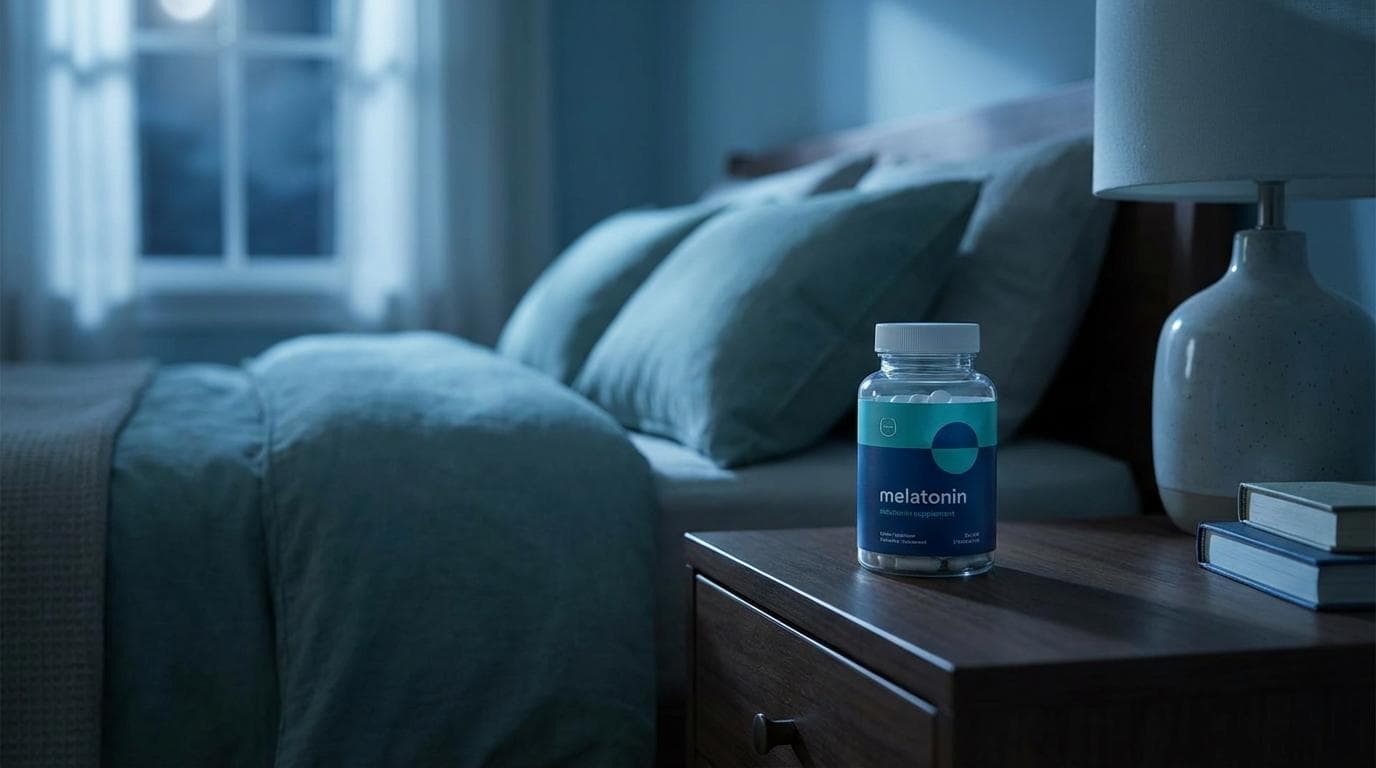
In the quest for a good night's sleep, many of us have found ourselves staring at the bright labels of melatonin supplements, promising a peaceful slumber. It’s estimated that millions worldwide regularly turn to this over-the-counter aid, making it one of the most popular sleep supplements available. From bustling city dwellers struggling with jet lag to parents seeking a solution for their children's restless nights, melatonin has become a household name.
But as its popularity soars, so do the questions and concerns. Is this widely available supplement truly safe? What does the science actually say about its efficacy and potential long-term effects? At Sleep Archetype, we believe in empowering you with accurate, science-backed information to make the best decisions for your unique sleep health. Let's dive deep into the world of melatonin.
How Melatonin Works: The Body's Natural Sleep Signal
To understand melatonin supplements, we first need to understand the body's natural melatonin. This fascinating hormone is primarily produced by the pineal gland, a small endocrine gland located deep within the brain. Its main role is to regulate our circadian rhythm – our internal 24-hour clock that dictates our sleep-wake cycle.
Think of natural melatonin as the conductor of your internal sleep orchestra. As daylight fades and darkness descends, your pineal gland receives a signal to ramp up melatonin production. This surge in melatonin tells your body it's time to prepare for sleep, promoting feelings of drowsiness and signaling to various physiological systems that it’s time to wind down. Conversely, when morning light hits your eyes, melatonin production is suppressed, helping you wake up and feel alert.
Melatonin supplements, therefore, aim to mimic this natural process. They introduce exogenous (external) melatonin into your system, essentially sending a stronger "sleep signal" to your brain. This can be particularly helpful when your natural circadian rhythm is out of sync, such as during jet lag or shift work. However, it’s crucial to remember that melatonin is a hormone, not a sedative or a sleeping pill in the traditional sense. It doesn't directly induce sleep but rather signals to your body that it's time to sleep by adjusting your internal clock.
Dosing Research: Finding the Sweet Spot
One of the most common misconceptions about melatonin is that "more is better." This couldn't be further from the truth. Research suggests that for many applications, lower doses of melatonin are often more effective and come with fewer potential side effects than higher doses.
Studies on circadian rhythm disorders like jet lag or Delayed Sleep-Wake Phase Disorder (DSWPD) often show efficacy with doses as low as 0.3 mg to 0.5 mg. These microdoses are closer to the physiological levels of melatonin naturally produced by the body. Higher doses, while sometimes used for specific conditions under medical supervision, don't necessarily lead to better sleep and can sometimes even cause a "hangover" effect or disrupt the body's natural production.
The challenge with melatonin dosing is compounded by the fact that in many countries, including the United States, melatonin is regulated as a dietary supplement, not a drug. This means there's less stringent oversight by regulatory bodies like the FDA regarding product purity, potency, and labeling accuracy. Studies have shown significant discrepancies between the amount of melatonin stated on the label and the actual content in the pills, with some containing much less and others significantly more. This makes finding a reliable dose even more difficult without rigorous third-party testing.
When considering melatonin, starting with the lowest effective dose (e.g., 0.5 mg to 1 mg) about 30-60 minutes before your desired bedtime is generally recommended, especially for jet lag or minor circadian adjustments. For more persistent issues, or if you're considering higher doses, always consult with a healthcare professional. They can help determine the appropriate dosage and duration of use for your specific needs, taking into account your individual health profile and other medications you might be taking.
Potential Side Effects: What to Watch For
While generally considered safe for short-term use, melatonin is not entirely without side effects. Most reported side effects are mild and tend to resolve quickly. These can include:
- Drowsiness or daytime sleepiness: Especially if taken too late or if the dose is too high.
- Dizziness: A feeling of lightheadedness or unsteadiness.
- Headache: A common complaint among some users.
- Nausea or stomach upset: Digestive discomfort can occur.
- Irritability or mood changes: Some individuals report feeling more irritable or experiencing changes in mood.
- Vivid dreams or nightmares: Melatonin can influence dream intensity in some people.
Less common but more serious side effects can include temporary depressive feelings, mild tremors, or anxiety. It's also important to be aware of potential interactions with other medications. Melatonin can interact with:
- Anticoagulants (blood thinners): Increasing the risk of bleeding.
- Immunosuppressants: Interfering with their effectiveness.
- Diabetes medications: Potentially affecting blood sugar levels.
- Contraceptive drugs: Which may increase melatonin levels in the body.
- Sedatives and other sleep aids: Potentiating their effects and leading to excessive drowsiness.
Individuals with certain health conditions, such as autoimmune diseases, seizure disorders, or depression, should exercise particular caution and always consult their doctor before taking melatonin. Pregnant or breastfeeding women are generally advised to avoid melatonin due to insufficient research on its safety in these populations.
Long-Term Safety: The Unanswered Questions
Perhaps one of the most significant areas of concern surrounding melatonin is the lack of robust, long-term safety studies. While short-term use appears to be relatively safe for most healthy adults, the effects of taking melatonin regularly over months or years are not well understood.
One theoretical concern is that consistent, long-term supplementation might suppress the body's natural production of melatonin. The pineal gland, like other endocrine glands, operates on a feedback loop. If it constantly detects high levels of external melatonin, it might reduce its own output. However, current research on this topic is mixed, with some studies suggesting no significant suppression and others indicating a potential for reduced endogenous production. More research is needed to definitively understand this mechanism and its implications.
Another consideration is the potential impact on developing bodies. While melatonin is sometimes prescribed for children with specific sleep disorders (like those associated with ADHD or autism spectrum disorder), its long-term effects on hormonal development, puberty, and overall growth are still largely unknown. The American Academy of Sleep Medicine and other professional organizations generally advise caution and medical supervision when using melatonin in children.
Given these unknowns, most experts recommend using melatonin for short periods when needed, rather than as a daily, long-term solution for chronic sleep issues. If you find yourself relying on melatonin consistently, it’s a strong signal to seek professional advice to uncover and address the root cause of your sleep difficulties.
When Melatonin Helps vs. When It Does Not
Melatonin is a tool, and like any tool, it's most effective when used for its intended purpose.
When Melatonin Often Helps:
- Jet Lag: This is one of the most well-established uses. Melatonin can help "reset" your internal clock to a new time zone, reducing the symptoms of jet lag, especially when traveling across five or more time zones.
- Shift Work Disorder: For individuals whose work schedules disrupt their natural circadian rhythm, melatonin can help facilitate sleep during daytime hours or adjust to rotating shifts.
- Delayed Sleep-Wake Phase Disorder (DSWPD): This is a condition where a person's sleep-wake cycle is significantly delayed compared to societal norms (e.g., consistently falling asleep after 2 AM and waking up late). Low-dose melatonin, taken several hours before the desired bedtime, can help gradually shift the sleep phase earlier.
- Sleep Problems in Children with Neurodevelopmental Disorders: Under medical supervision, melatonin has shown efficacy in improving sleep onset and duration in children with conditions like autism spectrum disorder or ADHD, who often struggle with sleep.
When Melatonin Often Does Not Help (or is less effective):
- Chronic Insomnia (without a circadian rhythm component): If your insomnia is due to stress, anxiety, pain, poor sleep hygiene, or other underlying medical conditions, melatonin is unlikely to be a magic bullet. It doesn't address the root cause and might only offer minimal, temporary relief.
- General Difficulty Falling Asleep: If you don't have a specific circadian rhythm disorder, simply taking melatonin to "knock you out" might not work as intended, as it's not a direct sedative. Your body might just be producing enough natural melatonin already.
- Sleep Maintenance Insomnia: If you have trouble staying asleep through the night, melatonin is generally less effective. Its half-life is relatively short, meaning its effects wear off quickly. Extended-release formulations exist but have mixed evidence for efficacy in this area.
The Dolphin Chronotype and Melatonin: A Deeper Look
Understanding your chronotype – your natural inclination to sleep at a certain time – is crucial for optimizing your sleep. At Sleep Archetype, we identify four main chronotypes:
- Lions: Early risers, productive in the morning, tire early.
- Bears: The most common chronotype, following the solar cycle, productive during the day.
- Wolves: Night owls, most alert in the evening, prefer to sleep and wake late.
- Dolphins: Often light sleepers, prone to insomnia, with a racing mind that struggles to shut down.
It's the Dolphin chronotype that often finds itself in a complex relationship with melatonin. Dolphins, characterized by their light sleep, fragmented rest, and an often overactive brain, are frequently among the first to reach for melatonin supplements. The appeal is clear: a promise of quieting the mind and gently coaxing the body into sleep.
However, for many Dolphins, melatonin often proves to be a temporary band-aid, or even ineffective. Why? Because the core issue for a Dolphin isn't necessarily a misaligned circadian rhythm or a lack of natural melatonin production. Instead, it's often an underlying state of hyperarousal, anxiety, or a mind that simply refuses to power down. Their brains are constantly "on alert," making it difficult to transition into deep, restorative sleep.
While melatonin might offer a slight nudge towards sleep onset for some Dolphins, it doesn't address the racing thoughts, the sensitivity to noise, or the fundamental anxiety that often drives their insomnia. In fact, relying on melatonin might prevent Dolphins from exploring more effective, sustainable strategies tailored to their unique needs.
For Dolphins, a different approach is often required. This includes:
- Robust Sleep Hygiene: A consistent, calming bedtime routine, a cool, dark, and quiet sleep environment, and avoiding stimulants close to bedtime.
- Stress Management Techniques: Mindfulness, meditation, deep breathing exercises, and journaling can be incredibly powerful in calming the Dolphin's overactive mind.
- Cognitive Behavioral Therapy for Insomnia (CBT-I): This is considered the gold standard treatment for chronic insomnia and is particularly effective for Dolphins. It helps restructure unhelpful thoughts about sleep and modify behaviors that perpetuate insomnia.
- Chronotype-Aligned Routines: Even though Dolphins struggle with sleep, understanding their chronotype can help them structure their day to maximize their periods of alertness and minimize stress before bedtime. For instance, scheduling demanding mental tasks earlier in the day and dedicating evenings to wind-down activities.
- Limiting Blue Light Exposure: Particularly crucial for Dolphins, as blue light from screens can further suppress natural melatonin production and keep the brain stimulated.
Ultimately, for the Dolphin, the journey to better sleep is less about external supplements and more about internal regulation and mastering the art of mental stillness.
Conclusion: A Tool, Not a Cure-All
Melatonin is a valuable tool for certain sleep challenges, particularly those related to circadian rhythm disruption. It has a relatively good safety profile for short-term use, especially at lower doses. However, it is not a universal solution for all sleep problems, nor is it a substitute for good sleep hygiene or addressing underlying health issues.
For chronotypes like the Dolphin, understanding the root cause of their sleep struggles – often an overactive mind and hyperarousal – is key. While they may try melatonin, it's rarely the complete answer. Instead, personalized strategies that focus on behavioral changes, stress management, and a deep understanding of their unique sleep patterns will yield more sustainable and profound results.
Always approach sleep challenges with an informed perspective. If you're considering melatonin, or if you're struggling with persistent sleep issues
Discover Your Sleep Chronotype
Take our free quiz to find your unique sleep chronotype and get a personalized 8-week program to optimize your sleep and energy.
Take the Free Quiz →More Articles
Social Jetlag: Why Your Weekend Sleep Habits Are Ruining Your Monday
Social jetlag disrupts your circadian rhythm every weekend. Learn how inconsistent sleep timing affects metabolism, mood, and long-term health by chronotype.
The Best Time to Nap Based on Your Chronotype
Discover the best time to nap based on your chronotype. Learn how Lions, Bears, Wolves, and Dolphins should time 20 vs 90-minute naps for maximum alertness.
How Much Sleep Do You Actually Need? (It Depends on Your Chronotype)
Discover how much sleep you actually need based on your chronotype. Bears, lions, wolves, and dolphins each have different optimal sleep durations.