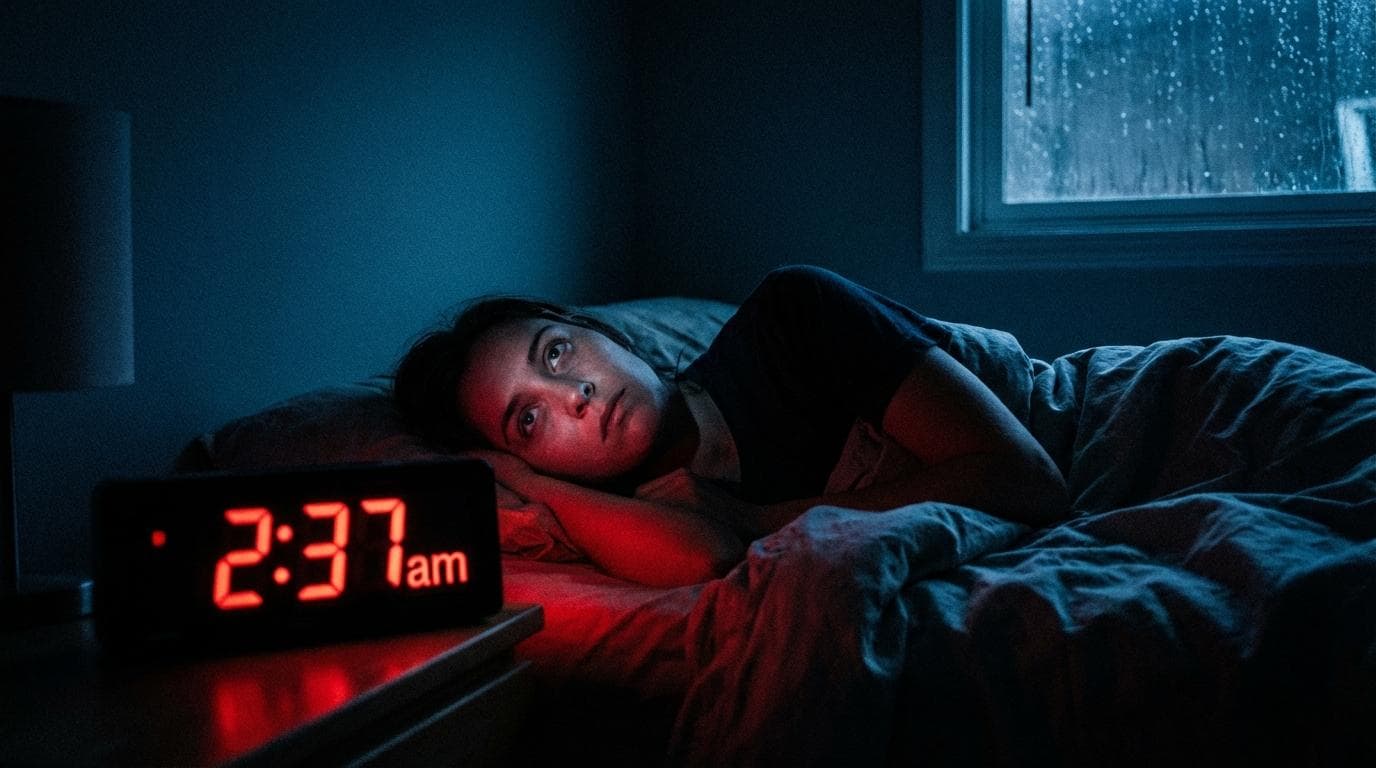
You’ve done it all, haven’t you? You put your phone away hours before bed, dimmed the lights, maybe even sipped some chamomile tea. Yet, as the clock ticks past midnight, you find yourself staring at the ceiling, mind racing, wide awake. The common advice to "just put down your screen" feels frustratingly inadequate because, for you, the problem runs much deeper.
It's a universal human experience to struggle with sleep now and then, but for many, the inability to fall asleep consistently transforms into a source of profound stress and exhaustion. It’s not just about missing out on rest; it’s about feeling disconnected from your body’s natural rhythms, battling a mind that refuses to quiet, and facing the daunting prospect of another groggy morning.
At Sleep Archetype, we understand that sleep isn't one-size-fits-all. Your unique biology, lifestyle, and even your innate chronotype play significant roles in how easily you drift off to dreamland. If putting away your devices hasn't been the magic bullet, it's time to look beyond the obvious. Let's explore seven often-overlooked reasons why you might be struggling to fall asleep, and how understanding them can unlock the path to more restful nights.
Beyond the Obvious: Understanding the Deeper Roots of Sleeplessness
The journey to better sleep begins with self-awareness. By understanding the intricate mechanisms that govern our sleep-wake cycle, we can identify personalized strategies that truly work, moving beyond generic advice to embrace solutions tailored to our individual needs.
1. Cortisol Dysregulation: The "Wired But Tired" Phenomenon
Imagine your body as a finely tuned orchestra, with hormones acting as conductors. Cortisol, often called the "stress hormone," is one of the most powerful. Naturally, cortisol levels should be highest in the morning, giving you that get-up-and-go energy, and gradually decline throughout the day, reaching their lowest point around bedtime. This natural dip signals to your body that it's safe to relax and prepare for sleep.
However, in our modern, high-stress world, this delicate rhythm can easily be disrupted. Chronic stress, an overly demanding schedule, late-night workouts, or even stimulating activities close to bedtime (yes, even non-screen related ones like intense planning or worrying) can keep cortisol levels elevated well into the evening. When your body is still pumping out stress hormones, it perceives a threat, making it incredibly difficult to transition into a restful state. You might feel physically exhausted but mentally "wired," unable to switch off and surrender to sleep. This isn't just a feeling; it's a physiological state of alertness that actively fights against sleep initiation.
2. Chronotype Misalignment: Fighting Your Inner Clock
One of the most profound, yet often ignored, reasons for sleep struggles is trying to force your body to sleep at a time that simply doesn't align with your natural chronotype. Your chronotype is your biological predisposition to sleep and wake at certain times, dictated by your genetics and the timing of your internal clock, or circadian rhythm.
There are four primary chronotypes:
- Lions: Early risers, productive in the morning, and tire out by early evening.
- Bears: Follow the solar cycle, feeling sleepy as the sun sets and waking with it. They often struggle with mid-day slumps.
- Wolves: Night owls, most alert and productive in the late afternoon and evening, struggling to wake early.
- Dolphins: The most challenging chronotype for sleep. Dolphins tend to have fragmented sleep, are light sleepers, often struggle with insomnia, and have an irregular sleep-wake pattern. They are often highly intelligent and anxious, with their minds frequently racing at night.
If you're a Wolf trying to force yourself to bed at 9 PM, or a Dolphin whose body simply refuses to settle into a predictable routine, you're fighting an uphill battle against your own biology. This misalignment creates a constant state of internal conflict. For Dolphins especially, whose internal clock is often erratic and whose nervous systems are highly sensitive, falling asleep can feel like an impossible task. Their brains are often overactive, making it hard to quiet the mental chatter and achieve the deep relaxation needed for sleep. Understanding and working with your chronotype, rather than against it, is a critical step toward effortless sleep.
3. Sleep Anxiety: The Paradox of Trying Too Hard
Have you ever found yourself thinking, "I have to fall asleep," only to find that the very act of trying makes sleep even more elusive? This is the cruel paradox of sleep anxiety. It’s a self-perpetuating cycle where the fear of not sleeping becomes a primary barrier to sleep itself.
Sleep anxiety manifests in various ways: a racing heart at the thought of bedtime, obsessively checking the clock, replaying past sleepless nights, or catastrophizing about the consequences of insufficient sleep. Your mind becomes hyper-vigilant, scanning for any signs of wakefulness, which ironically keeps you awake. This isn't just about general anxiety; it's a specific performance anxiety centered around sleep. The pressure to perform, to "get enough sleep," activates your sympathetic nervous system (your "fight or flight" response), making it impossible for your body to relax into the parasympathetic state needed for sleep. The more you try to control sleep, the more it slips away.
4. Temperature Troubles: The Body's Cooling Process
Our bodies are remarkably intelligent. To initiate sleep, our core body temperature naturally needs to drop by about 1 to 2 degrees Fahrenheit. This cooling process signals to the brain that it's time to wind down. If your bedroom environment is too warm, or if your body is struggling to dissipate heat, this crucial internal signal gets disrupted.
Think about it: have you ever tried to sleep when you're uncomfortably hot? It's nearly impossible. A warm room, heavy blankets, or even a hot shower too close to bedtime can prevent your core temperature from dropping sufficiently. While a warm bath or shower can initially make you feel sleepy due to the subsequent rapid cooling, if your environment keeps you warm, your body will struggle to maintain the lower temperature needed for sustained sleep. The ideal bedroom temperature for most people is between 60-67°F (15-19°C). Ensuring your sleep environment facilitates this natural cooling process is a simple yet powerful way to invite sleep.
5. Caffeine Half-Life: The Lingering Stimulant
You know not to drink coffee right before bed, but do you truly understand how long caffeine stays active in your system? Caffeine has a half-life of approximately 5-6 hours. This means that if you have a cup of coffee at 3 PM with 200mg of caffeine, by 8 PM, you still have about 100mg of caffeine circulating in your bloodstream. By 1 AM, there could still be 50mg.
For some individuals, especially those with slower caffeine metabolism (which is genetically determined), this effect can be even more pronounced. Even if you don't feel jittery, that residual caffeine can be enough to interfere with the production of adenosine, a neurotransmitter that builds up throughout the day, promoting sleepiness. Caffeine blocks adenosine receptors, effectively masking your body's natural sleep signals. So, that afternoon pick-me-up might be sabotaging your ability to fall asleep hours later, long after the initial buzz has worn off. This is particularly relevant for sensitive individuals, including many Dolphins, who may be more susceptible to the lingering effects of stimulants.
6. Hyperarousal: The Body That Can't "Switch Off"
Beyond specific sleep anxiety, some individuals experience a chronic state of hyperarousal, both cognitive and physiological. This isn't just about feeling stressed; it's about your body being stuck in a perpetual state of readiness, making it nearly impossible to transition into the relaxed state required for sleep.
Cognitive hyperarousal means your mind is constantly active, ruminating, planning, or worrying, even when you try to quiet it. Physiological hyperarousal involves an elevated heart rate, muscle tension, increased body temperature, and heightened brain activity – essentially, your body's "on" switch is jammed. This state can be triggered by chronic stress, underlying anxiety disorders, certain medical conditions, or even an overstimulating daily routine that doesn't allow for sufficient wind-down time. For someone in a state of hyperarousal, their brain actively resists sleep, perceiving it as a vulnerable state, and thus keeps the body on high alert. This is a common struggle for Dolphins, whose sensitive nervous systems often lead to a baseline level of hyperarousal.
7. Circadian Drift: The Shifting Sleep Window
Your circadian rhythm is your internal 24-hour clock that regulates your sleep-wake cycle, hormone release, and other bodily functions. It's primarily influenced by light exposure and consistent routines. When your circadian rhythm drifts, it means your body's natural timing for sleep and wakefulness is no longer aligned with your desired schedule.
This often happens due to inconsistent sleep patterns: staying up very late on weekends, working irregular shifts, or simply having no fixed bedtime or wake-up time. For example, if you consistently go to bed at 2 AM on Friday and Saturday, your circadian rhythm will naturally shift later. Then, when you try to go to bed at 10 PM on Sunday to prepare for the work week, your body simply isn't ready. Your internal clock is still operating on the later weekend schedule, making it incredibly difficult to fall asleep at the earlier time. This circadian drift creates a constant battle between your intentions and your biology, leading to frustrating sleepless nights, especially when you're trying to "catch up" on an earlier schedule. This is particularly challenging for Wolves and Dolphins, who naturally tend towards later bedtimes and often struggle to maintain a consistent schedule.
Finding Your Path to Sleep
Understanding these deeper reasons is the first step. It's about shifting your perspective from "What's wrong with me?" to "How can I better understand and support my body's natural sleep processes?" It's not always about a quick fix, but about cultivating a deeper relationship with your unique sleep needs.
Ready to discover your chronotype? Take our free 2-minute quiz at sleeparchetype.com and get a personalized 8-week sleep program.
Further Reading
- Sleep Foundation: Insomnia Treatment - https://www.sleepfoundation.org/insomnia/treatment
- Cleveland Clinic: Can't Sleep? - https://health.clevelandclinic.org/cant-sleep
Discover Your Sleep Chronotype
Take our free quiz to find your unique sleep chronotype and get a personalized 8-week program to optimize your sleep and energy.
Take the Free Quiz →More Articles
Social Jetlag: Why Your Weekend Sleep Habits Are Ruining Your Monday
Social jetlag disrupts your circadian rhythm every weekend. Learn how inconsistent sleep timing affects metabolism, mood, and long-term health by chronotype.
The Best Time to Nap Based on Your Chronotype
Discover the best time to nap based on your chronotype. Learn how Lions, Bears, Wolves, and Dolphins should time 20 vs 90-minute naps for maximum alertness.
How Much Sleep Do You Actually Need? (It Depends on Your Chronotype)
Discover how much sleep you actually need based on your chronotype. Bears, lions, wolves, and dolphins each have different optimal sleep durations.